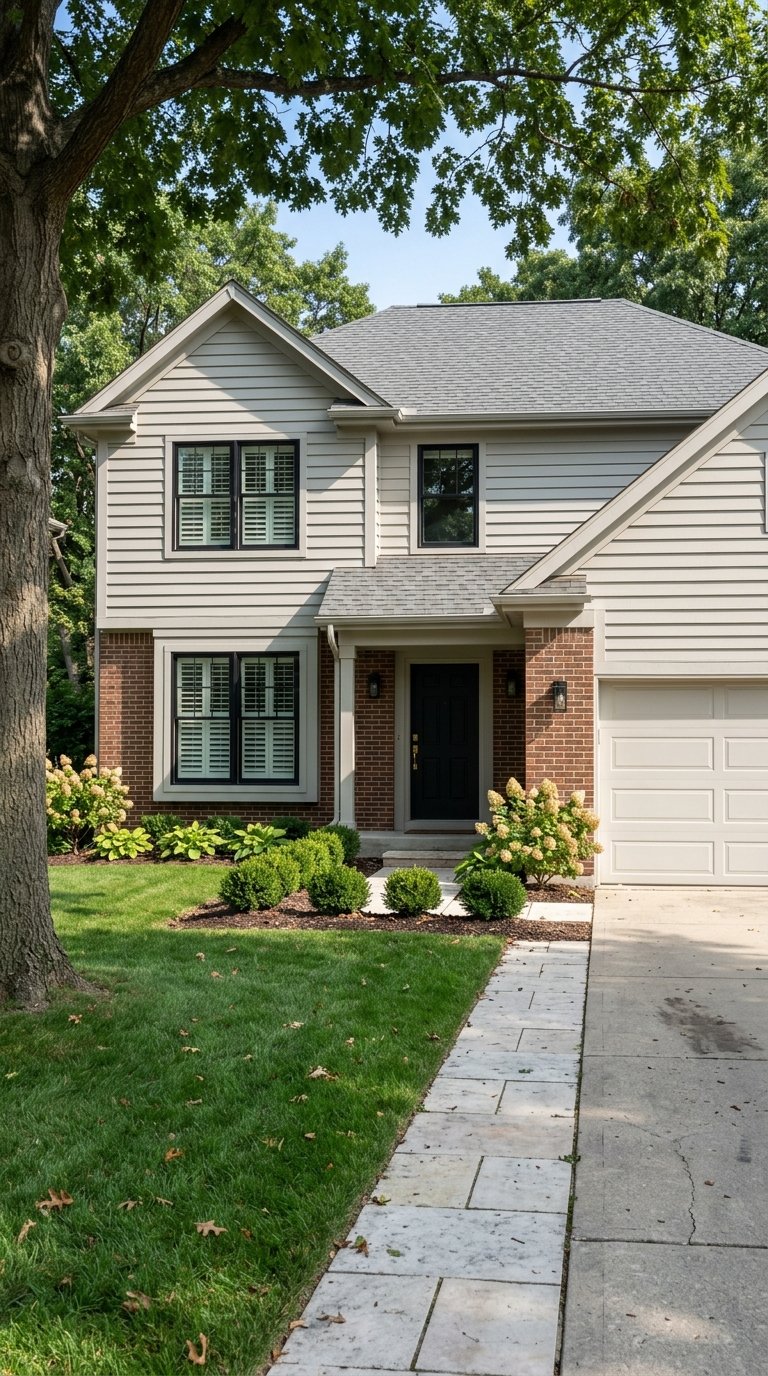
Barrington IL Neighborhood Home Styles by Area
June 4, 2026
June 4, 2026
Wondering why one part of Barrington feels like a classic in-town neighborhood while another feels more spacious and tucked away? If you are starting your home search here, it helps to know that Barrington is not one single look or lifestyle. Understanding how home styles, lot sizes, and neighborhood patterns differ can help you focus your search and make a more confident decision. Let’s dive in.
Barrington’s housing pattern is shaped by both its history and its zoning. According to the Village’s 2021 Comprehensive Plan, single-family residential is the largest land-use category at 47.4% of the village, but the zoning map shows a wide range of residential districts, from 5-acre minimum lots in R-1 to 7,500-square-foot lots in R-6, plus two-family and general residential districts.
That matters because it means your experience can change a lot from one pocket of Barrington to another. Some areas are closer to the village center, with older homes and a more connected street pattern, while others offer larger lots, more separation between homes, and a quieter suburban feel.
If you want the most walkable part of Barrington, the Village Center stands apart. The village describes this area as a mixed-use district anchored by the Metra station, the retail core along Hough Street and Main Street, and community destinations like the Catlow Theater, Ice House Mall, Cook Street Plaza, Barrington’s White House, and local civic buildings.
From a housing standpoint, this is where Barrington feels oldest and most architecturally distinctive. The Comprehensive Plan also notes that the Village Center supports low- to medium-density multifamily options like rowhomes and condominiums, so this is one of the places where attached housing fits more naturally into the local pattern.
The Historic Overlay District gives the in-town area much of its character. The village says the district includes more than 350 properties, is listed on the National Register of Historic Places, and is one of the largest frame-home districts in Illinois.
Most contributing structures were built between 1880 and 1939. Common styles include Folk and Craftsman/Folk Victorian, Victorian/Queen Anne, Tudor Revival, Colonial Revival, and Italianate homes.
If you are drawn to older architecture, this area may be especially appealing. It is also important to know that exterior changes in the Historic Overlay District require review by the Architectural Review Commission and a Certificate of Appropriateness, which helps preserve the historic streetscape.
This part of Barrington may suit you if you value:
In simple terms, this is the least estate-like version of Barrington living. It offers convenience, history, and a stronger sense of being in the center of town.
Just outside the Village Center, Barrington has an inner ring of mature residential neighborhoods. These areas often combine smaller lots, older homes, established trees, and a location that still keeps you fairly close to the center of town.
The Comprehensive Plan describes Neighborhood 1 as a mature area of mostly single-family homes on lots of about 7,500 square feet, with some larger lots plus multifamily and two-family homes. Neighborhood 2 is also described as a mature, tree-lined area of mostly 7,500-square-foot lots, with two-family dwellings near the Village Center and along Hough Street.
Neighborhood 3 adds even more variety, with a wider mix of residential types and ages. Parts of Neighborhoods 2 and 3 also overlap with the Historic Overlay District, so these areas can blend older architecture with a practical in-town location.
For many buyers, these neighborhoods strike a middle ground. You still get some of the convenience of in-town Barrington, but with more traditional single-family housing than you may find right in the center.
These neighborhoods often appeal to buyers who want:
Not every older part of Barrington looks historic in the same way. Some neighborhoods feel formally historic, while others feel simply established, with older subdivision planning and longtime tree cover.
A good example is Jewel Park, which the Comprehensive Plan calls one of the oldest residential developments in the area. It features curving, tree-lined streets and single-family homes on lots of 15,000 square feet and larger, showing that older Barrington neighborhoods do not always mean compact lots.
Neighborhood 6 offers a different pattern, with an older grid layout around Kainer Avenue, Glendale Avenue, and Eastern Avenue. That creates a more traditional street network and a different visual rhythm than the curving streets seen in other parts of town.
Street layout can shape how a neighborhood feels just as much as home style does. Curving streets often create a softer, more suburban look, while grid streets can feel more connected and a bit more urban in form.
If you are comparing homes in older parts of Barrington, this is worth paying attention to. Two neighborhoods may both be established and tree-lined, but still offer very different day-to-day experiences.
As you move farther from the Village Center, Barrington often shifts toward a more spacious suburban pattern. In these areas, homes tend to sit on larger lots, and the overall feel becomes less about walkability and more about yard space, privacy, and separation.
Neighborhood 9 includes Barrington Highlands, where the plan says many single-family homes from the 1950s sit on lots of about 10,000 square feet. The west side of Dundee Avenue in the same neighborhood is described as having homes on lots of at least 20,000 square feet.
Neighborhood 10, which includes the Roslyn Area Homeowner’s Association, Barrington Court, and Carriage Trail, generally features homes on parcels of about 10,000 to 15,000 square feet. Neighborhood 12, which includes Fox Point North, Fox Point East, Listhartke, Tall Trees, Castle Court, Barrington Hilltop, and Barrington Meadows, is described as mostly lots of at least 20,000 square feet around Lake Louise.
In these parts of Barrington, buyers often notice:
The village’s zoning map supports this pattern. Barrington still includes very low-density residential districts such as R-1 with 5-acre minimum lots and R-2 with 1-acre minimum lots, reinforcing that larger-lot living is part of the community’s identity.
When buyers ask how Barrington neighborhoods differ, they are usually asking about lifestyle as much as architecture. In general, the closer-in neighborhoods tend to support a more convenient, village-centered routine, while outer residential pockets lean more toward space, privacy, and open surroundings.
Barrington’s Metra station on the Union Pacific Northwest Line adds to the appeal of the Village Center and nearby neighborhoods for buyers who want commuter access to Chicago. On the other hand, the village’s recreation resources highlight places like Langendorf Park and Recreation Center, Citizens Park with its connection to Cuba Marsh, and Ron Beese Park, while the surrounding area includes preserves such as Crabtree Nature Preserve, Deer Grove Preserve, Spring Creek Preserve, Cuba Marsh, and Grassy Lake Preserve.
That does not make one area better than another. It simply means your best fit depends on whether you prioritize walkability and older homes, or lot size and breathing room.
If you are trying to choose the right area, start by thinking about how you want your home to feel day to day. The answer usually points you toward the right neighborhood pattern before you ever narrow it down to a specific address.
Here are a few helpful questions to ask yourself:
When we help buyers compare Barrington neighborhoods, we focus on those practical differences first. It is one of the best ways to avoid wasting time on homes that look good online but do not match how you actually want to live.
Whether you are looking for a classic in-town property, a move-up home on a larger lot, or a neighborhood that balances both, local context makes a big difference. If you want help sorting through the options, Kate Fanselow can help you compare Barrington neighborhoods with a clear strategy and personal guidance.
Stay up to date on the latest real estate trends.

We bring together a mix of integrity, imagination and an inexhaustible work ethic, striving to make each buying and selling experience the best possible. Contact us today to find out how we can be of assistance to you!