In Inverness, an Acre Doesn't Guarantee Room for a Pool
October 29, 2026
October 29, 2026
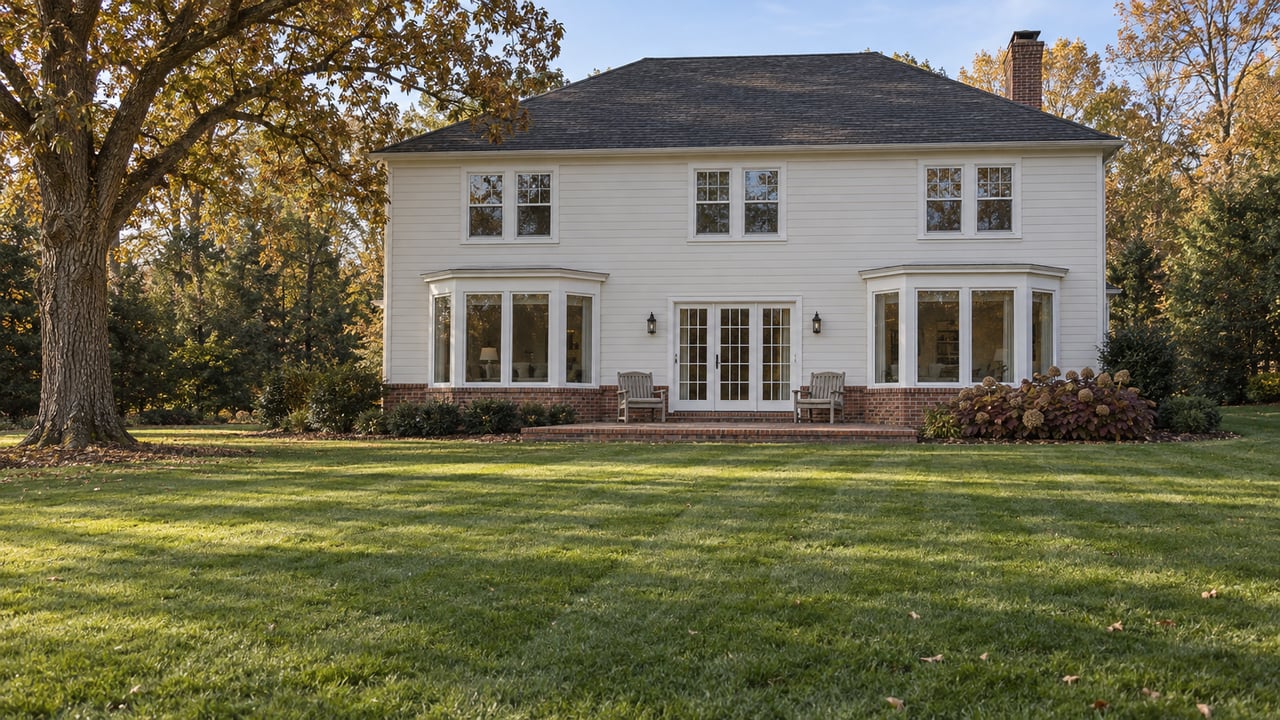
One Inverness property sits on a lot of about one acre. Over the summer, its owners asked the village to allow a 15-by-30-foot pool behind the house. Their application explained that the lot wasn't too small. The problem was geometry. Because of how the neighboring homes sit, the 100-foot distance lines the village measures from those houses "extend diagonally across the rear yard and converge over the area immediately behind the existing residence," which is exactly where a pool makes sense. The application says three designs that met the rule were considered and set aside, because each put the pool impractically far from the house or ran into the slope, a retaining wall and mature landscaping.
If you're buying here, that is the main lesson. In Inverness, acreage doesn't tell you where a pool, patio or addition can go. The answer depends on where the neighbors built and where your septic field sits, and you can work out both before you make an offer.
The pool rule is Section 4-7-3 of the Inverness Village Code. The village adopted it in 2006. It counts more than the water. Every distance applies to "any portion of an outdoor swimming pool, including appurtenant equipment, enclosing barrier and other structures as required by this chapter."
| Measured from | Minimum distance under §4-7-3 |
|---|---|
| Any property line | 25 feet |
| Any residence on another property, existing when the pool is built | 100 feet |
| Any septic tank or septic field | 25 feet |
| Your own house's front line, toward the street | No pool allowed in front of it |
The 100-foot line is the one that surprises people, and the wording matters. It applies to a neighbor's house "existing at the time of construction of the pool." So the line depends on when the pool goes in, measured against houses that are already there. The same section requires a permit before anyone builds, enlarges or alters a pool.
Lot size sets the baseline. Under the village zoning code, the A-1 residential district requires at least one acre and an average width of 140 feet. A-2 lots can be 20,000 square feet with a 100-foot average width. Pools are exempt from the regular rear-yard setback, which is 50 feet in A-1 and 40 feet in A-2. That exemption doesn't help much, because the pool section adds its own distances on top. On a lot that's 140 feet wide, a neighbor's house 30 feet past the side line already covers a lot of the yard once you swing a 100-foot arc from it.
In both 2026 pool cases in the village record, the barrier fence came closest to the neighboring house, and the fence set how much relief the owners needed.
In the summer case, the application put the pool 82 feet from the neighboring house and the spa 77 feet away. The fence and walk area came within about 69 feet. That meant asking for roughly 18 feet of relief at the pool and roughly 31 feet at the barrier. The pool equipment sat about 111 feet away and needed no relief. The village's staff memo lists the parcel at about 42,907 square feet. The Zoning Board of Appeals heard the request on August 25, 2026, and voted 4–0 to recommend approval. On September 15, the Village Board approved the variation unanimously.
The January 2026 case involved an 18-by-30-foot inground pool. The request covered the pool, its equipment, the walk area and part of the barrier fence, with the fence as the closest point at 75 feet from the neighboring house. Two nearby households sent letters of support. According to the ZBA's January 21, 2026 minutes, the board voted to recommend approval with conditions.
When you walk a backyard and picture a pool, include the fence that has to go around it and the walkway inside that fence. That full footprint is what gets measured.
Many Inverness homes rely on private septic systems. The Village of Barrington says its municipal water and sewer reach only "portions of Inverness." The septic system sets a second boundary that most buyers never draw.
Inverness runs its own septic program. Cook County's Department of Public Health leaves incorporated Inverness out of its septic review because the village has its own IDPH-approved ordinance. That ordinance requires the septic area to stay clear of "driveways, accessory buildings, swimming pools, parking areas, buried lawn sprinkling systems and underground utility services, patios, slabs, additions to the original structure," and anything else that blocks access for maintenance. The pool rule then adds another 25 feet around any tank or field.
So on a septic lot, you have to keep two zones in mind. One is the 100-foot reach from the neighbors' houses. The other is the field plus its 25-foot buffer. The yard you can actually build in is whatever lies outside both. Some lots have plenty left over. In the summer case, the space left over was too far from the house to be practical.
Septic work here is more involved than a plumbing call. The village code treats replacing a septic tank, or replacing or adding a major component, as a new system that needs plan approval. The application needs scaled engineered drawings, site and soil information, and design calculations. Work can't start without 48 hours' notice, and a record drawing has to be filed before final approval. The septic permit is separate from the building permit and has to come first, and the village requires a $1,000 cash performance bond. If a permitted sanitary sewer is within 300 feet of a residential property, a new or renovated private system can't be approved, unless a physical barrier or ordinance prevents the connection.
This work shows up in the village's monthly numbers. The building report for September 2026 showed no new single-family homes and no commercial permits. It did show three residential additions or alterations, six miscellaneous permits for things like decks, pools and generators, and four engineering permits in the category for replacing septic tanks and driveway culverts. Another 17 permits were on hold for corrections. With almost no new construction, nearly all the activity happens on existing lots, inside the lines described above.
One septic rule matters directly at closing. The owner has to keep maintenance records for the life of the system, and "these records shall be transferred from owner to owner." For systems installed and permitted after January 1, 2014, the tank has to be evaluated before or within three years of installation and then at least every five years. It has to be pumped when scum and settled solids pass 33 percent of the tank's liquid capacity. Aerobic treatment units have to be evaluated and maintained every six months.
The county health department offers paid well and septic evaluations. It says an evaluation is "typically" needed when buying or selling a home with a well or septic system. For a buyer, the records show how the system has been cared for and where it sits, and the location marks which part of the yard is off limits.
Out at the street, the owner of a property is responsible for maintaining the driveway and its appurtenant structures, culvert included, under §8-3-6.
If the lines don't work, Inverness has a public process for relief. It takes time to plan for:
The same code section limits administrative variations from the pool standards to 10 percent. Anything bigger, like the 31 feet requested in the summer case, goes to a hearing. In that case, the Daily Herald notice ran August 10, the hearing was August 25 and the Board voted September 15. That's about five weeks from the published notice to the final vote.
Everything here is general information about village rules, not legal advice. Before you count on a pool, addition or septic plan, confirm your own property's details with the Village of Inverness, a licensed engineer or an attorney.
Does a bigger lot get around the 100-foot rule? Not by itself. The distance is measured from the neighbors' houses, so how they're placed matters as much as your acreage. The summer 2026 case involved a lot of about one acre, and it still needed a variation.
Does a hot tub need a pool permit? Under §4-7-4, a hot tub or spa doesn't need a permit unless it has a permanent electrical or plumbing connection.
Can a patio or addition go over the septic field? The village septic code says the septic area must stay free of patios, slabs, additions, pools and similar structures.
Who handles septic permits in Inverness? The village does, under its own IDPH-approved ordinance. Cook County leaves Inverness out of its septic review.
If a pool or a backyard addition is part of why you're looking in Inverness, we can pull the survey and the septic records and walk the yard with those lines in mind before you make an offer. Kate Fanselow and our team would love to help. Let's talk about your next move.
Stay up to date on the latest real estate trends.

We bring together a mix of integrity, imagination and an inexhaustible work ethic, striving to make each buying and selling experience the best possible. Contact us today to find out how we can be of assistance to you!